
Currently Empty: ₹0.00
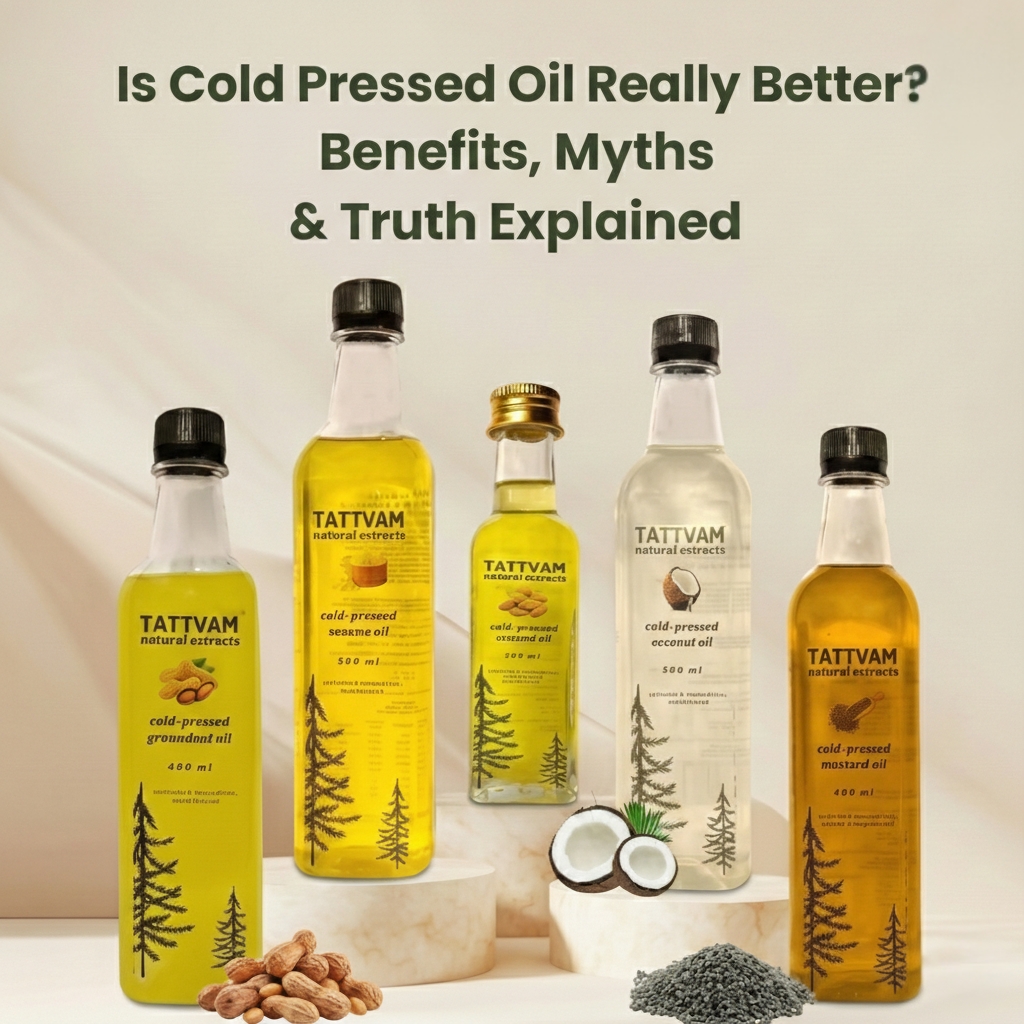
Cold pressed oil is considered better because it is made without high heat or chemicals, which helps keep its natural nutrients, antioxidants, and healthy fats intact. Unlike refined oil, it is minimally processed and retains its real flavor and goodness. While it’s not a magic solution for health, using cold pressed oil in moderation can be a more natural and wholesome choice for daily cooking.
What Is Cold Pressed Oil and How Is It Different from Refined Oil?
This oil is extracted naturally from seeds and nuts without high heat or chemicals, which helps retain its real nutrients, aroma, and flavor, while refined oil goes through heavy processing, bleaching, and deodorizing that can reduce its natural goodness. When we talk about cold pressed oil vs refined oil, the biggest difference lies in purity and nutrition because cold pressed oils keep antioxidants, vitamins, and healthy fats intact, making them a smarter natural cooking oil for daily use. Many people ask, is cold pressed oil healthy? Yes, especially when chosen wisely like cold pressed mustard or sesame oil, as it supports better digestion and overall wellness. Brands like Tattvam cold pressed oil focus on traditional extraction methods that preserve authenticity, making everyday cooking not just tasty but also more nourishing for your family.
How Cold Pressed Oils Keep Nutrients, Antioxidants & Natural Goodness Intact
Cold pressed oils are made without high heat or chemical processing, which is the main reason they keep their nutrients, antioxidants, and natural goodness intact. When seeds are crushed slowly using traditional wooden or mechanical presses, the temperature stays low, so essential vitamins like Vitamin E, healthy fats, and plant-based antioxidants are not damaged. In contrast, refined oils are exposed to high heat, bleaching, and deodorizing processes that can strip away many of these natural compounds. Because cold pressing avoids harsh treatment, the oil retains its original aroma, real flavor, and nutritional value—making it a more wholesome and naturally nourishing choice for everyday cooking.
Cold Pressed Oil vs Refined Oil: Which One Is Actually Healthier for Daily Cooking?
Here’s a clear and easy comparison in table format
| Basis | Cold Pressed Oil | Refined Oil |
| Extraction Process | Extracted naturally at low temperature without chemicals | Processed at high heat with chemicals, bleaching & deodorizing |
| Nutrient Retention | Retains vitamins, antioxidants & healthy fats | Many nutrients lost during heavy processing |
| Antioxidants | Naturally present and intact | Mostly reduced or destroyed |
| Taste & Aroma | Strong, natural aroma and authentic flavor | Neutral smell and taste |
| Processing Level | Minimal processing | Highly processed |
| Health Factor | Considered healthier for daily cooking due to natural nutrients | Less nutritious due to refinement |
| Heart Health Support | Supports heart health when used in moderation | May lack protective nutrients |
| Best For | Traditional Indian cooking, tadka, low to medium heat cooking | Deep frying & high-heat cooking (longer shelf life) |
| Chemical Usage | No chemicals used | Chemicals used during refining process |
| Overall Verdict | More natural and nutrient-rich option for daily use | More shelf-stable but less nutritious |
For regular home cooking, cold pressed oil is generally the healthier choice because it keeps its natural goodness intact, while refined oil focuses more on shelf life and appearance than nutrition.
Is Cold Pressed Oil Really Better for Heart Health and Cholesterol Levels?
Yes, cold pressed oil is generally considered better for heart health and cholesterol levels—when used in the right quantity. Because it is extracted without high heat or chemicals, it retains natural antioxidants, vitamin E, and healthy fats like MUFAs (monounsaturated fats) and PUFAs (polyunsaturated fats), which help support good cholesterol (HDL) and may help manage bad cholesterol (LDL). Unlike refined oils that lose many protective nutrients during processing, cold pressed oils maintain their natural compounds that reduce oxidative stress and support overall cardiovascular wellness. Options like cold pressed mustard oil and sesame oil are traditionally used in Indian kitchens and are known for their heart-friendly fat profile. However, portion control is important—any oil in excess can affect cholesterol. So, when used moderately as part of a balanced diet, cold pressed oil can be a healthier choice for daily cooking and heart care.
Common Myths About Cold Pressed Cooking Oils – What’s True and What’s Marketing?
Myth 1: Cold pressed oil has zero cholesterol
Truth: All plant-based oils — whether cold pressed or refined — naturally contain zero cholesterol because cholesterol is found only in animal products. So this is not a special benefit, just basic science.
Myth 2: Cold pressed oil is 100% healthier in every situation
Truth: Cold pressed oil retains more nutrients and antioxidants due to low-heat extraction, which is a real benefit. But “100% healthier” depends on how you use it. Quantity, overall diet, and lifestyle matter more than just the oil type.
Myth 3: You cannot cook or fry in cold pressed oil
Truth: You can cook with it. Many cold pressed oils like mustard or groundnut oil work well for Indian cooking. However, extremely high-temperature deep frying repeatedly may reduce its nutritional quality — just like any oil.
Myth 4: Refined oil is completely harmful
Truth: Refined oils go through heavy processing and may lose nutrients, but calling them “poison” is marketing exaggeration. The real issue is overconsumption and poor diet patterns.
Myth 5: All cold pressed oils in the market are pure
Truth: Not always. Some brands use “cold pressed” as a marketing term. Always check extraction method, packaging, and brand transparency before buying.
Myth 6: Cold pressed oil alone will fix cholesterol problems
Truth: No single oil can control cholesterol alone. Balanced diet, fiber intake, exercise, and overall fat consumption matter more.
Final Reality
Cold pressed oils do retain more natural nutrients and antioxidants compared to refined oils — that’s scientifically true. But they are not magic. Smart usage, moderation, and choosing a genuine brand make the real difference between health benefit and marketing hype.
Why More Families Are Switching to Natural Wood Pressed Oils
More families are switching to natural wood pressed oils because they are extracted slowly at low temperatures without chemicals, which helps preserve nutrients, antioxidants, and the oil’s original flavor. As people become more health-conscious, they prefer a natural cooking oil for daily use that feels pure and minimally processed instead of heavily refined oils that lose much of their nutritional value. Wood pressed oils are often chosen for their richer taste, better digestion support, and heart-friendly fat profile, making them a smart option for families who want cleaner ingredients and more wholesome nutrition in their everyday meals.
Best Cold Pressed Oils for Indian Cooking (Mustard, Sesame & Groundnut)
Here are some of the best cold pressed oils for Indian cooking that blend great taste with real nutrition:
- Cold Pressed Mustard Oil – A favorite in many Indian households, this oil has a strong aroma and rich flavor that enhances sabzis, tadkas, and pickles; it’s also valued for its heart-friendly fats and potential support for cholesterol when used in moderation.
- Cold Pressed Sesame Oil – Especially great for South Indian and Bengali cooking, this oil brings a nutty depth to dishes and is packed with antioxidants and natural goodness that stay intact because it’s extracted traditionally.
- Cold Pressed Groundnut (Peanut) Oil – Mild in taste and perfect for everyday cooking, this oil offers a good balance of healthy fats and heat stability, making it ideal for light frying and regular Indian recipes.
These cold pressed options are among the top choices if you want natural cooking oil for daily use that retains nutrients, authentic flavor, and traditional benefits.
Does Cold Pressed Oil Improve Digestion and Overall Wellness?
Yes, cold pressed oil can support better digestion and overall wellness when used in moderation as part of a balanced diet. Because it is extracted without high heat or chemicals, it retains natural antioxidants, vitamin E, and healthy fats that help the body absorb fat-soluble vitamins like A, D, E, and K. Oils like cold pressed mustard, sesame, and groundnut contain beneficial fatty acids that may support gut health and reduce oxidative stress in the body. Many people also notice that minimally processed oils feel lighter and more satisfying in home-cooked meals compared to heavily refined oils. However, oil alone is not a magic solution—good digestion and wellness depend on overall eating habits, fiber intake, hydration, and lifestyle. When chosen wisely and used in the right quantity, cold pressed oil can be a wholesome addition to daily cooking.
Is Cold Pressed Oil Worth the Price? Cost vs Health Benefits Explained
Yes — cold pressed oil is generally worth the price when you compare the health benefits it offers with its cost, especially if you care about quality and long-term wellness. Because cold pressed oils are extracted using traditional methods without high heat or chemicals, they retain nutrients, antioxidants, and healthy fats that support digestion, heart health, and overall well-being — benefits that refined oils often lose during heavy processing. While the upfront cost may be higher than refined oil, you’re paying for natural quality, better flavor, and potential long-term health value, not just calories. For families focused on wholesome eating and daily nutrition, choosing cold pressed oil can be seen as an investment in health rather than just a grocery expense — making the extra price worth it in many cases.
Why Choosing a Trusted Brand Like Tattvam Cold Pressed Oil Matters
Choosing a trusted brand like Tattvam cold pressed oil matters because not all oils labeled “cold pressed” are genuinely extracted using traditional, low-heat methods — some use the term more as a marketing tactic. A reputable brand ensures authentic extraction, transparent labeling, and consistent quality so you actually get the nutrients, antioxidants, and natural goodness you’re paying for. With trusted cold pressed oils, you’re less likely to encounter adulteration, hidden chemicals, or misleading claims that reduce health benefits. In short, picking a reputable brand means you get real purity, authentic taste, consistent results in Indian cooking, and a higher chance of the nutrition and wellness advantages you expect from genuine cold pressed oils.
FAQs
1. Which is the healthiest oil to use?
There is no single “healthiest” oil for everyone, but oils that are minimally processed and rich in healthy fats are generally better choices. Cold pressed oils like mustard, sesame, and groundnut retain natural antioxidants, vitamin E, and beneficial fatty acids that support heart health and overall wellness. The healthiest oil also depends on your cooking style, dietary needs, and portion control. Balance matters more than just the oil type.
2. Which cold-pressed oil is good for daily use?
For Indian cooking, cold pressed mustard oil, sesame oil, and groundnut oil are excellent daily-use options. Mustard oil works well for sabzi and tadka, sesame oil is great for South Indian dishes, and groundnut oil is ideal for light frying. The best choice depends on your taste preference and cooking method, but rotating oils can also help maintain nutritional balance.
3. Which is better, cold-pressed or organic?
Cold pressed refers to the extraction method (low heat, no chemicals), while organic refers to how the seeds were grown (without synthetic pesticides or fertilizers). Ideally, the best option is oil that is both organic and cold pressed. If choosing one, cold pressed ensures better nutrient retention, while organic ensures cleaner sourcing. Both serve different but important purposes.
4. What is a cold pressed oil?
Cold pressed oil is extracted from seeds or nuts without using high heat or chemical refining. The oil is mechanically pressed at controlled temperatures to preserve its natural nutrients, aroma, flavor, and antioxidants. Because it undergoes minimal processing, it retains more of its original nutritional value compared to refined oil.
5. Is cold pressed oil really better?
In many cases, yes. Cold pressed oil retains more antioxidants, vitamins, and healthy fats because it is not exposed to high heat during extraction. This makes it a better option for those looking for a more natural cooking oil for daily use. However, moderation and overall diet quality are still more important than just switching oils.
6. What are the benefits of cold pressed oil?
Cold pressed oil offers several benefits, including better nutrient retention, higher antioxidant levels, natural aroma, and authentic taste. It may support heart health, help manage cholesterol levels when used moderately, and assist in better absorption of fat-soluble vitamins like A, D, E, and K. Since it is minimally processed, it is often considered a cleaner and more wholesome choice.
7. Which is healthier: cold pressed oil or refined oil?
Cold pressed oil is generally considered healthier than refined oil because it retains more natural nutrients and antioxidants. Refined oil undergoes high-heat processing, bleaching, and deodorizing, which can strip away beneficial compounds. However, both oils should be consumed in moderation, as excess oil intake can affect overall health.
8. Can I cook in cold pressed oil?
Yes, you can cook in cold pressed oil. It works well for everyday Indian cooking such as sautéing, tadka, and medium-heat frying. However, repeated deep frying at extremely high temperatures may reduce its nutritional value. For best results, use it for regular home cooking rather than excessive reheating.
9. Which is better: cold extracted or cold pressed?
Cold extracted and cold pressed are often used interchangeably, as both refer to oil produced without high heat. In most cases, they mean the same thing — oil extracted at low temperatures to preserve nutrients. What matters more is the authenticity of the process and brand transparency rather than just the terminology on the label.
10. Is sesame oil good for knee pain?
Yes, sesame oil can help with mild knee pain when used for warm massage. It has natural anti-inflammatory properties that may reduce stiffness and improve circulation. However, it is not a cure for serious joint problems — persistent pain should be checked by a doctor.